


What are the benefits of Evening Primrose Oil?
For over 40 years, Efamol has been researching the benefits of evening primrose oil - and that story is where ours began.
More than 350 studies have been conducted with Efamol Evening Primrose Oil, exploring its positive effects across a wide range of areas, from skin health to women’s wellbeing. In fact, in our latest 12-week Cue Consumer Research study, 85% of women said they felt happier with their skin after taking Efamol Evening Primrose Oil.
If you’re looking for a natural, science backed way to support your skin and balance throughout the month, evening primrose oil is a powerful place to start.

What is evening primrose oil?
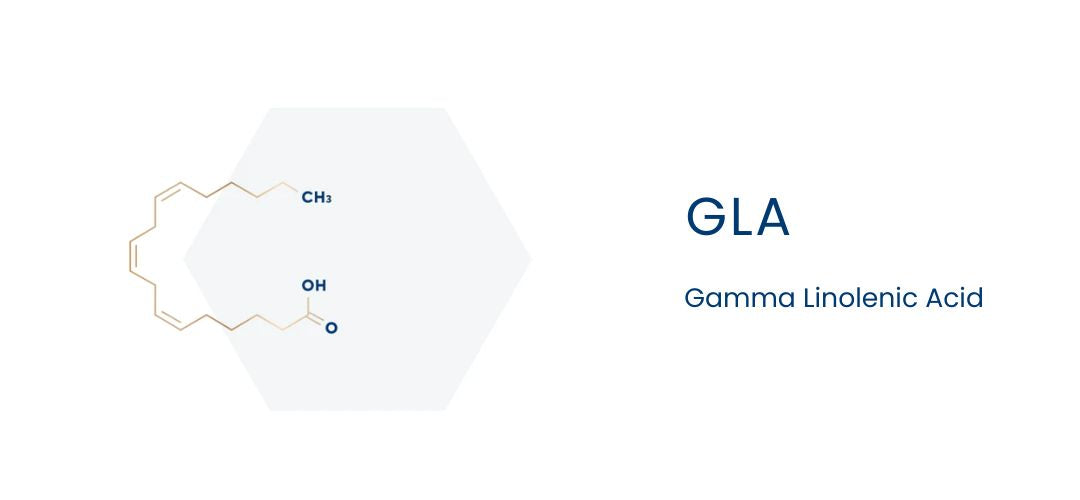
Evening primrose oil (EPO) is extracted from the seeds of Oenothera biennis and is naturally rich in linoleic acid (LA) and gamma-linolenic acid (GLA). GLA is the standout nutrient here: it is an omega-6 fatty acid that the body can convert into dihomo-gamma-linolenic acid (DGLA), a building block for signalling molecules involved in inflammatory balance and skin function.¹˒⁶ Research suggests this pathway may help explain why evening primrose oil has been studied for skin barrier support and certain women’s health concerns.⁶˒⁷
In simple terms, the benefits of evening primrose oil come down to nourishment at the cellular level. GLA becomes part of cell membranes, helps support moisture retention in the skin, and may influence the balance of compounds involved in inflammation.¹˒⁶˒⁷ That is one reason EPO has been researched for dry, irritated or reactive skin, as well as symptoms that may fluctuate with hormonal changes. ¹˒³˒⁴

1. Evening primrose oil may help support skin hydration and smoothness
Among the best-known benefits of evening primrose oil is its role in supporting skin comfort and hydration. In a randomised, double-blind, placebo-controlled study in healthy adults, Efamol evening primrose oil taken for 12 weeks improved multiple skin parameters, including moisture, firmness, elasticity and roughness.¹
There is also clinical research in atopic dermatitis showing that EPO may help with dryness, itch and overall skin severity in some groups. Older placebo-controlled trials reported improvements in dryness and itch, while a later randomised placebo-controlled study in mild atopic dermatitis also found benefit.²˒³˒⁴ At the same time, not every trial has shown the same effect, so the most balanced conclusion is that the strongest case is for skin barrier support, particularly where dryness is a key concern, rather than a universal result in every skin condition.⁴˒⁵
That broader skin story also fits with Efamol’s own consumer findings. In the Cue Consumer Research study, 77 women aged 18 to 65 took 6 x 500mg capsules daily for 12 weeks. The results were striking:
- 85% felt happier with their skin
- 82% felt more confident with their skin
- 87% felt skin looked and felt less dry
- 85% felt skin was softer
- 84% felt skin was smoother
- 82% felt skin was beautifully smooth and nourished looking
These are consumer-reported outcomes rather than a placebo-controlled clinical endpoint, but they add an important real-world layer to the clinical research.

2. It may help support the skin barrier from within
When people talk about the benefits of evening primrose oil, they often focus on appearance. But the deeper story is the skin barrier. A healthy barrier helps reduce moisture loss and keeps skin feeling comfortable, supple and resilient.
Research suggests GLA plays a role in membrane structure and epidermal barrier function.⁶˒⁷ In the Korean placebo-controlled trial in mild atopic dermatitis, investigators assessed measures including skin hydration and transepidermal water loss, supporting the idea that EPO’s effects are linked to barrier integrity as well as symptom perception.⁴ Other research has linked rising plasma GLA and DGLA levels with clinical improvement in atopic dermatitis, adding biological plausibility to the benefits seen in some skin studies.⁵
This “inside-out” approach is one reason evening primrose oil remains so popular for dry skin support. It is not simply about coating the skin surface; it is about providing fatty acids that the body can use.⁵˒⁶

3. Evening primrose oil has been studied for women’s wellbeing linked to hormonal changes
Another reason people search for the benefits of evening primrose oil is its traditional use in women’s health. Here, it is important to be precise: the evidence is mixed, and some uses are better supported than others.
For premenstrual syndrome (PMS), clinical trials and reviews have produced inconsistent results. Some individual studies reported improvement over time, but placebo-controlled evidence has not shown a clear, consistent advantage for EPO across PMS symptoms.⁸˒⁹
For cyclical breast discomfort (mastalgia), the evidence is also mixed. A 2021 systematic review and meta-analysis concluded that EPO was not clearly superior to placebo or other treatments overall.¹⁰ More recent research suggests EPO combined with vitamin E may be more promising than EPO alone, but that is a different intervention and should not be overstated.¹¹
For menopausal hot flushes, the picture remains uncertain. Some trials have found improvements in symptom intensity, while a 2024 systematic review concluded that there is still insufficient evidence to draw firm conclusions overall.¹²˒¹³
So, when discussing hormonal balance, the fairest claim is this: evening primrose oil has been widely researched in areas of women’s wellbeing that may be influenced by hormonal change, but results vary by outcome, study design and population.⁸˒⁹˒¹⁰˒¹³

Why GLA matters so much
GLA is what makes evening primrose oil different from many standard plant oils. The body can convert GLA into DGLA, which in turn can give rise to compounds such as prostaglandin E1 (PGE1). These compounds have been associated with anti-inflammatory and regulatory effects, which helps explain the scientific interest in EPO for skin and inflammatory balance.⁶˒⁷
This matters because not everyone converts ordinary linoleic acid efficiently into GLA. That is one reason direct dietary sources of GLA, such as evening primrose oil, have attracted attention in clinical research.⁶ In studies of atopic dermatitis, EPO supplementation has been shown to raise plasma GLA and DGLA levels, with some studies finding these increases correlate with clinical improvement.⁵
A quick buying checklist: what to look for in an evening primrose oil supplement
Not all evening primrose oil supplements are created equal. If you want the full benefits of evening primrose oil, look for:
- Clearly stated GLA content: Don’t just check the oil amount; look at how much gamma-linolenic acid each daily dose provides. Ensure the oil is batch tested for its GLA content.
- Oil quality & purity: the oil requires gentle extraction methods to ensure that the phytonutrients are not damaged. The oil should be a rich, golden colour - if it's pale / colourless, the oil has been heavily refined.
-
Traceability and sourcing: Choose a brand with a clear research heritage and transparent quality standards.
- Brand research: A product supported by clinical work or published data gives extra reassurance.
- Ease of use: Consistency matters, so capsules that fit easily into a daily routine can make a real difference.
For many shoppers, that is exactly why Efamol's Evening Primrose Oil stands out: evening primrose oil is not an add-on to the story - it is the original story.

Discover Efamol's Evening Primrose Oil Range
Efamol’s Evening Primrose Oil range is designed to tick every box on your buying checklist, combining trusted sourcing, clear GLA content and more than 40 years of research heritage. Whether you prefer the convenience of Efamol Evening Primrose Oil Capsules or the flexibility of the Efamol Evening Primrose Oil Dropper, both options offer a simple way to add high-quality evening primrose oil to your daily routine. With traceable quality standards and a legacy rooted in scientific research, Efamol makes it easy to choose an evening primrose oil supplement you can feel confident in.
Shop now:
- Efamol High Strength Pure Evening Primrose Oil Capsules (available in 1000mg or 500mg capsules) - contains 115mg of GLA per 1000mg.
- Efamol Pure Evening Primrose Oil Dropper - contains 103mg per 904mg (1ml). Vegan. Can be used as a supplement or applied topically.
The bottom line on the benefits of evening primrose oil
The benefits of evening primrose oil are best understood through two lenses: tradition and evidence. Traditionally, it has long been used in women’s wellness. Scientifically, its strongest support is around GLA delivery, skin nourishment and skin barrier function, with additional - but more mixed - research in areas linked to hormonal change.¹˒⁴˒⁵˒⁸˒¹⁰˒¹³
For Efamol, evening primrose oil has been at the heart of the brand for more than four decades. And while science should always be interpreted carefully, the combination of published research, deep product heritage and positive consumer feedback makes a compelling case for why evening primrose oil continues to matter today.
References:
- Muggli R. Systemic evening primrose oil improves the biophysical skin parameters of healthy adults. Clin Nutr. 2005.
https://pubmed.ncbi.nlm.nih.gov/18492193/ - Schalin-Karrila M, et al. Evening primrose oil in the treatment of atopic eczema. J R Soc Med. 1987.
https://pubmed.ncbi.nlm.nih.gov/3307886/ - Senapati S, et al. Evening primrose oil is effective in atopic dermatitis: a randomized placebo-controlled trial. Indian J Dermatol Venereol Leprol. 2008.
https://pubmed.ncbi.nlm.nih.gov/19052401/ - Chung BY, et al. Effect of Evening Primrose Oil on Korean Patients With Mild Atopic Dermatitis: A Randomized, Double-Blinded, Placebo-Controlled Clinical Study. Ann Dermatol. 2018.
https://pubmed.ncbi.nlm.nih.gov/30065580/ - Simon D, et al. Gamma-Linolenic Acid Levels Correlate with Clinical Efficacy of Evening Primrose Oil in Patients with Atopic Dermatitis. Adv Ther. 2014.
https://pmc.ncbi.nlm.nih.gov/articles/PMC3930832/ - Fan YY, Chapkin RS. Importance of dietary gamma-linolenic acid in human health and nutrition. J Nutr. 1998.
https://pubmed.ncbi.nlm.nih.gov/9732298/ - Sergeant S, et al. Gamma-linolenic acid, Dihomo-gamma-linolenic, Eicosanoids and Inflammatory Processes. Eur J Pharmacol. 2016.
https://pmc.ncbi.nlm.nih.gov/articles/PMC4975646/ - Khoo SK, Munro C. Evening primrose oil and treatment of premenstrual syndrome. Med J Aust. 1990.
https://pubmed.ncbi.nlm.nih.gov/2201888/ - Budeiri DJ, et al. Is evening primrose oil of value in the treatment of premenstrual syndrome? Control Clin Trials. 1996.
https://pubmed.ncbi.nlm.nih.gov/8721802/ - Adni LLA, et al. A Systematic Review and Meta-Analysis of the Efficacy of Evening Primrose Oil for Mastalgia Treatment. Int J Environ Res Public Health. 2021.
https://pubmed.ncbi.nlm.nih.gov/34200727/ - Kumari J, et al. Effectiveness of Evening Primrose and Vitamin E for Cyclical Mastalgia: A Prospective Study. 2024.
https://pubmed.ncbi.nlm.nih.gov/38752050/ - Farzaneh F, et al. The effect of oral evening primrose oil on menopausal hot flashes. Arch Gynecol Obstet. 2013.
https://pubmed.ncbi.nlm.nih.gov/23625331/ - Thevi T, et al. Evening Primrose Oil for Menopause Hot Flashes. 2024 systematic review.
https://pubmed.ncbi.nlm.nih.gov/39829189/ - Timoszuk M, Bielawska K, Skrzydlewska E. Evening Primrose (Oenothera biennis) Biological Activity Dependent on Chemical Composition. Antioxidants. 2018.
https://pmc.ncbi.nlm.nih.gov/articles/PMC6116039/


